
.svg)


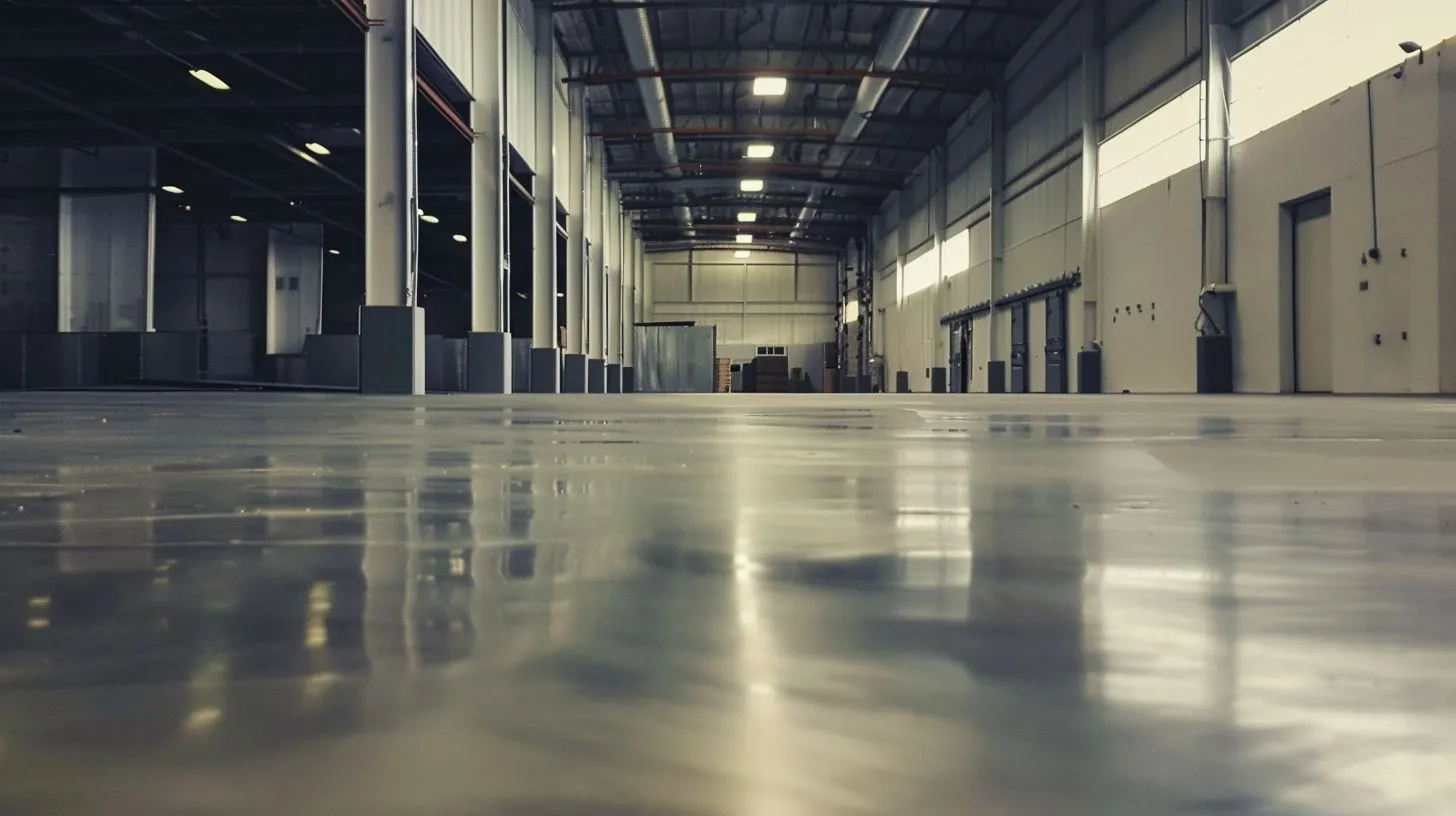
When it comes to upgrading commercial floors, two of the most common options are epoxy flooring and polished concrete. Both are popular choices for businesses looking to improve durability, appearance, and functionality—but they serve different purposes.
So how do you know which one is right for your space?
Understanding the differences between epoxy flooring and polished concrete can help you make the best decision for your business.
Epoxy flooring is a coating system applied over concrete to create a durable, seamless surface. It typically includes multiple layers, such as a base coat, decorative flakes, and a protective topcoat.
Commercial epoxy flooring is designed to handle:
Because of its protective qualities, epoxy flooring is commonly used in warehouses, garages, showrooms, and industrial settings.
Polished concrete is created by grinding down the surface of the concrete and polishing it to achieve a smooth, glossy finish. Instead of adding a coating, the process enhances the existing concrete.
Commercial polished concrete is often used in:
It provides a clean, modern look without adding additional layers to the surface.
Both options are durable, but they perform differently depending on the environment.
Epoxy flooring adds a protective layer on top of the concrete, helping shield it from impact, moisture, and chemicals. This makes it ideal for high-demand environments where floors take a lot of abuse.
Polished concrete is strong as well, but since it doesn’t include a protective coating, it may be more vulnerable to staining or surface wear in certain conditions.
For heavy-duty commercial use, epoxy flooring often has the advantage.
Safety is a major factor in any commercial space. Epoxy flooring can be customized with slip-resistant textures, making it a safer option for areas where spills or moisture are common.
Polished concrete, while smooth and visually appealing, can become slippery—especially when wet.
For businesses that prioritize safety, epoxy flooring offers more flexibility and control.
Both flooring options are relatively low maintenance, but epoxy flooring is easier to clean in environments where spills are frequent.
Because epoxy flooring is non-porous:
Polished concrete is also easy to maintain, but it may require more frequent cleaning to keep its shine and prevent staining.
When it comes to appearance, both options offer unique benefits.
Epoxy flooring provides more customization. With decorative flakes, color options, and finishes, businesses can create a floor that matches their branding or style.
Polished concrete offers a more natural, minimalist look with a glossy finish. While it looks clean and modern, it doesn’t offer as many design options as epoxy flooring.
Cost can vary depending on the size of the space and the condition of the existing concrete.
Polished concrete can sometimes have a lower upfront cost since it works with the existing surface. However, epoxy flooring often provides better long-term value due to its protective qualities and durability.
For businesses looking to minimize repairs and maximize lifespan, epoxy flooring is often the better investment.

At DFW Flake & Epoxy Floor Coatings, we help businesses find the right flooring solution for their needs, delivering long-lasting results that combine performance and style.


.svg)